If you lead people, this is the article I most want you to read.
Everything in this series so far has been about what people are feeling as AI reshapes their work: lost, behind, isolated, adrift, unsure who they are. If you’re a manager, a supervisor, a business owner, or anyone with people looking to you, those people are on your team. And a lot of them won’t tell you.
This is the eleventh article in the series on the human side of the AI shift. If you’re just starting, go back to the first one, The Computer Works for Us.
It’s a people problem first
I’m a leader, and I have leaders above me. If I could get every boss to understand one thing about this moment, it would be that the AI shift is a people problem before it’s a technology problem.
People are uneasy. Some are wrestling with real questions about who they are if a machine can do their work. Some are heading toward burnout, trying to learn a new world while still running the old one. Most of that will never come up in a status meeting.
A good leader needs to be very aware of that, and to say so out loud.
Be careful with the articles
This is a small thing, but it has a surprisingly big effect.
When a leader forwards an article about how some other company is doing amazing things with AI, they usually mean it as encouragement. “Look what’s possible!”
But it doesn’t land that way. Every one of those articles turns up the pressure a little. What people hear is, “We’re behind, and you need to catch up.” I’ve written about how it makes even me feel behind, and I’m close to the front of this.
So keep sharing what’s useful. Just know how it feels on the other end, and pair it with some reassurance.
Two groups are carrying more than you think
Older workers are feeling a little panicked. They’ve spent a lifetime building experience, and they’re afraid, though they may not say it, that it isn’t worth as much anymore. That’s a heavy thing to carry into work every day.
Younger workers have it hard, too. A lot of junior jobs are disappearing. That’s a reality. Some young people are coming out of college with a mountain of debt, trained for jobs that may not exist anymore. It’s hard to ask somebody to reinvest in learning new ways when they’ve just spent tens of thousands of dollars learning last year’s ways.
Both groups need a leader who actually sees them, and “adapt” isn’t going to cut it.
Be sympathetic, even pastoral
I’m a pastor, so maybe this comes naturally to me. But I really believe leaders need to be sympathetic, even pastoral, right now.
That doesn’t mean going soft on the work. It means understanding that the people doing the work are going through a tough time. Ask them how they’re doing and mean it. Listen for the issue under the issue. When someone pushes back hard on AI, try being curious before you’re corrective.
Hold the why tightly and the how loosely
A lot of bosses are a little older, which means some of us are also stuck in the old ways. I include myself in that.
So I’d ask this of leaders with long experience. Be humble enough to ask questions of the people who are figuring out the new tools. Some of them are younger than you, and some of them report to you, and they might be able to teach you something.
And don’t live and die on a particular technique or way of doing things. Your years of experience are very valuable, but mostly because of the principles you’ve learned, not the specific methods. Keep those principles front and center for your organization.
Experienced leaders can be the best champions of the why and the what: why we do this work, what we’re trying to accomplish, what good looks like. But they should be really loose on the how. When a leader insists on an old how, it creates tension across the whole organization. (I wrote more about this in Is My Work Still a Calling?)
Two things I do that seem to help
I haven’t figured this all out yet. But I do have two habits that seem to make a difference for my teams.
I spend about half of my one-on-ones on things that aren’t work. Family, life, how they’re really doing, what they’re excited about or worried about. It’s a simple way to show I care about them as people and not just as producers. In a season when so much of work runs through screens and machines, I think that half hour of human attention matters.
I’m transparent that I’m learning too. I don’t claim to be the expert on AI. I tell my teams the conversation is ongoing and none of us has it figured out. I try to show some humility and teachability, and to model it. When a leader admits they’re still learning, it gives everybody else permission to admit it too.
Shepherd the flock
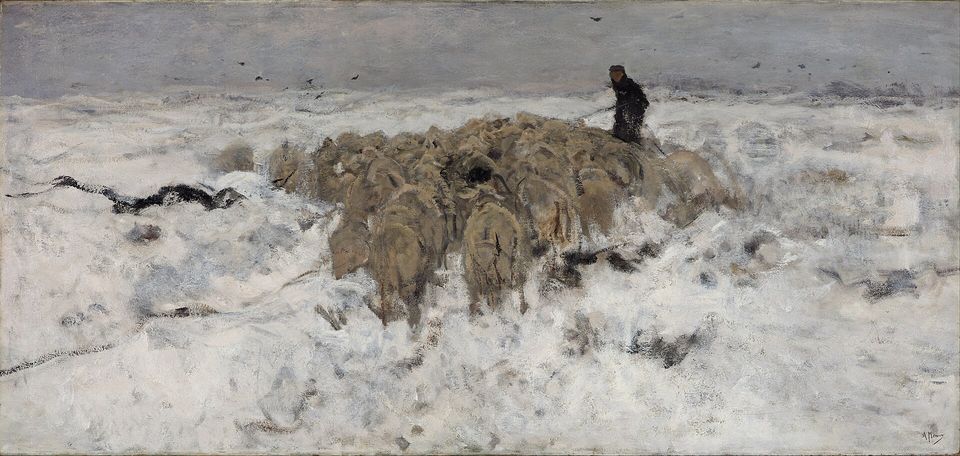
The Bible gives a picture of leadership that I find helpful at work, not just at church. Peter wrote to church leaders, “Shepherd the flock of God that is among you… not domineering over those in your charge, but being examples to the flock” (1 Peter 5:2–3).
Not domineering. Being examples. I think that’s a pretty good description of what leaders owe their people right now. Instead of pushing harder, go first. Model the humility and the learning and the care you want to see.
You don’t have to share my faith to recognize a good leader. Most of us have had at least one boss who made us feel seen, especially when things were hard. Be that boss.
What to do this week
Name the people problem. In your next team meeting, say out loud that this is an unsettling season, and that it’s okay to feel that.
Add reassurance to the articles. Next time you share something about AI, include a line like, “No pressure. We’ll figure this out together.”
Spend half of a one-on-one on life. Ask how someone is really doing. Then listen.
Ask someone to teach you. Find a person on your team who’s ahead of you on AI and ask them to show you what they’ve learned.
Check your hows. Is there an old way of doing things you’re insisting on? Ask whether it’s a principle or just a habit.
Enjoyed this article?