You finish a project. It’s good. People like it. And then a little voice in the back of your head asks: Did I actually do this? Or did the machine?
A lot of people feel like impostors when AI does part of the work for them. Can I put my name on it? Can I feel proud of it? Is it even mine?
This is the ninth article in our series about the human side of the AI shift. If you’re just joining, you can start with The Computer Works for Us.
Ours, not just mine
Usually, I still feel like the work is mine.
I’ve been a manager for a long time. The work I delegate to people on my team is still my team’s work, and I’m responsible for it. Nobody thinks a manager is a fraud because other people did some of the tasks on a project. That’s just how teams work.
Working with AI agents feels a lot like that. Actually, the more accurate word is ours. I don’t mind that agents did some of it. I’m the one who started it and shaped it and decided it was ready.
So I care a lot more about who owns the work than about who typed every line.
Some things should stay human
That doesn’t mean anything goes.
Our church has an AI policy that spells out certain things we believe humans should always do. For example: pastoral counseling, praying for specific people, and the real wrestling with Scripture that goes into a sermon. You don’t hand those to a machine, no matter how good it gets.
Your workplace may not have a written policy. But I think it’s worth deciding for yourself where your line is. Which parts of your work need to be you? A machine might well be able to produce something there. The value is in a human doing it.
Author and editor
For my own writing, the line is pretty simple. I’m the author, and AI is the editor.
The substance has to be mine. The ideas, the convictions, the stories, the quotes. If it isn’t something I believe and would say to your face, it’s not going out under my name.
But editing is real and valuable work. Every good writer uses an editor. An editor looks over a piece and checks it for grammar and formatting problems. A good one also gives feedback, pointing out where the writer got too wordy or needed to go deeper. I’m happy to have an AI take the place of a human editor for that. Whether the editor is a person or an AI matters a lot less to me than whether the substance is mine.
How this series was actually written
I’ll show you exactly how these articles came together, because I think being open about it is part of the answer here.
It started with an interview. I talked, and an AI asked me questions. I dumped out key ideas, stories, phrases, and convictions, often out loud by voice, sometimes while I was doing other things. Sometimes I pointed it to things I’d already written.
Then the editor went to work. The AI shaped what I said into the style I use for articles on this site. I’ve given it my patterns: how long sections should be, how titles work, the call-outs, the action steps at the end, the kinds of questions I like to ask. I’ve written about the instructions I give it.
It asks me when it needs more. I’ve told it to come back to me whenever it needs more content, a decision about tone, or a story to go deeper on a section. So it does more than formatting. It’s a partner that keeps pulling more out of me.
And I’m the final editor. I read it. I change what’s wrong. Nothing gets published until I’m willing to stand behind it.
So is this article mine? Yes. I started it and designed the content, and the stories and convictions are mine. The AI helped carry out my ideas and made them sound clearer, which is what a good editor does.
Paul had help too
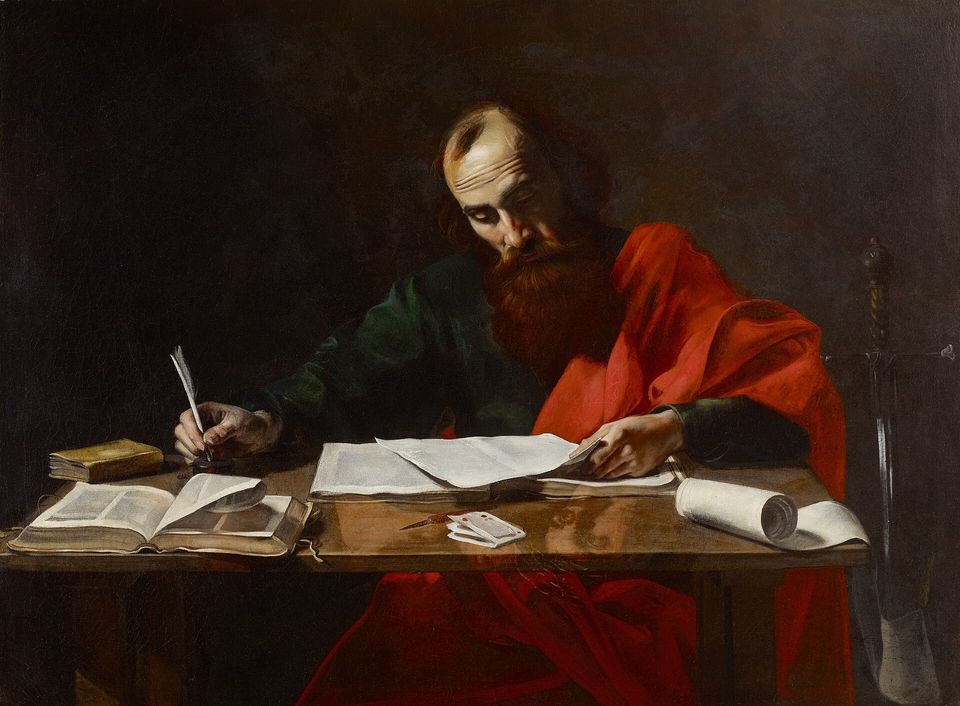
There’s something in the Bible a lot of people miss. At the end of Paul’s letter to the Romans is a greeting from somebody else: “I Tertius, who wrote this letter, greet you in the Lord” (Romans 16:22).
Tertius was Paul’s scribe. Paul dictated, and Tertius wrote it down. Nobody has ever thought of Romans as Tertius’s letter. The words and the ideas and the authority were Paul’s. Tertius helped with the execution.
Delegating the writing didn’t make Paul any less the author. He was the author because the substance came from him and he stood behind every word.
You don’t have to share my faith to understand the principle. Authorship is not about who held the pen but whose ideas they were and who is responsible for them.
Where the impostor feeling is right
Sometimes that “Did I actually do this?” voice is right.
If you didn’t really think about the problem, didn’t shape the result, didn’t check it, and just passed along whatever the machine produced, then it’s fair to wonder whether it’s yours. In that case I wouldn’t call it impostor syndrome. That’s your conscience telling you something true.
Quitting AI won’t fix that. Doing the parts only you can do will, and that means bringing the substance, making the decisions and owning the result.
What to do this week
Decide your line. What parts of your work must always be you? Write them down.
Be the author, not just the forwarder. Before you share anything AI helped with, ask: Are the core ideas mine? Do I stand behind it?
Use AI like a good editor. Hand it your draft and ask where you’re unclear, too wordy, or not deep enough.
Have it interview you. If you’re stuck, ask an AI to ask you questions. You might be surprised what comes out.
Own the result. If your name is on it, read it all the way through. Every time.
Enjoyed this article?