AI was supposed to give us our time back.
In some ways it has. Tasks that used to take a day can get done in an hour now. But if you’ve noticed you’re still working just as much as you were before, you’re not alone.
This is the tenth article in the series on the human side of the AI shift. You can start with The Computer Works for Us.
Expectations went up. Workloads didn’t go down.
This is what I see in my day job leading engineering teams.
Expectations have gone up. Delivery timelines are expected to be much faster. If AI can help you build something in half the time, the assumption is that it should be done in half the time.
Workloads haven’t gone down. Not for anyone I know. The time we save gets filled right back up.
If anything, it feels heavier right now.
Living in two worlds at once
I think there’s a reason this moment is especially frustrating. We’re living in the old world and the new world at the same time.
The old ship is still sailing. The systems we’ve always run still have to be run, and the work we’ve always done still has to get done. Our customers still need what they needed from us last year.
Meanwhile, we’re trying to learn the new world, and it’s still being built while we learn it. The tools change every few months. We don’t know the good ways of working with them yet, and we haven’t built the supporting systems the new world needs.
So we’re learning while we produce. And we’re expected to produce faster while we learn.
That’s a lot to ask of people. If you’re tired and a little frustrated right now, that’s okay. It’s an honest reaction to an unusually hard season. Being in the workforce right now is frustrating, and honestly it helps just to say that out loud.
The good news inside the bad news
There is one bright spot.
The workload hasn’t gone down, but it has shifted. We can hand off the mundane tasks and spend more time on the ones that are enjoyable and valuable.
I think that’s just how people are made. We’ll always fill whatever capacity we have with whatever we think is worth doing. Give us free time and we’ll find something meaningful to put in it, and I don’t see anything wrong with that. It’s part of being human.
The trouble starts when someone else is deciding what fills that capacity, and the answer is always “more, faster.” Then the treadmill just speeds up.
What rest looks like for me
People often ask me how I find rest with a day job, a church, projects and a family.
For me, rest really comes down to one thing. I turn the device off.
That’s it.
It might sound almost too simple. But think about how rarely we actually do it. The device is how work reaches us, and it’s how the AI reaches us, and the news and the notifications and the endless feed. As long as it’s on, some part of you is still on the treadmill.
When it’s off, the treadmill stops, and you can be where you are.
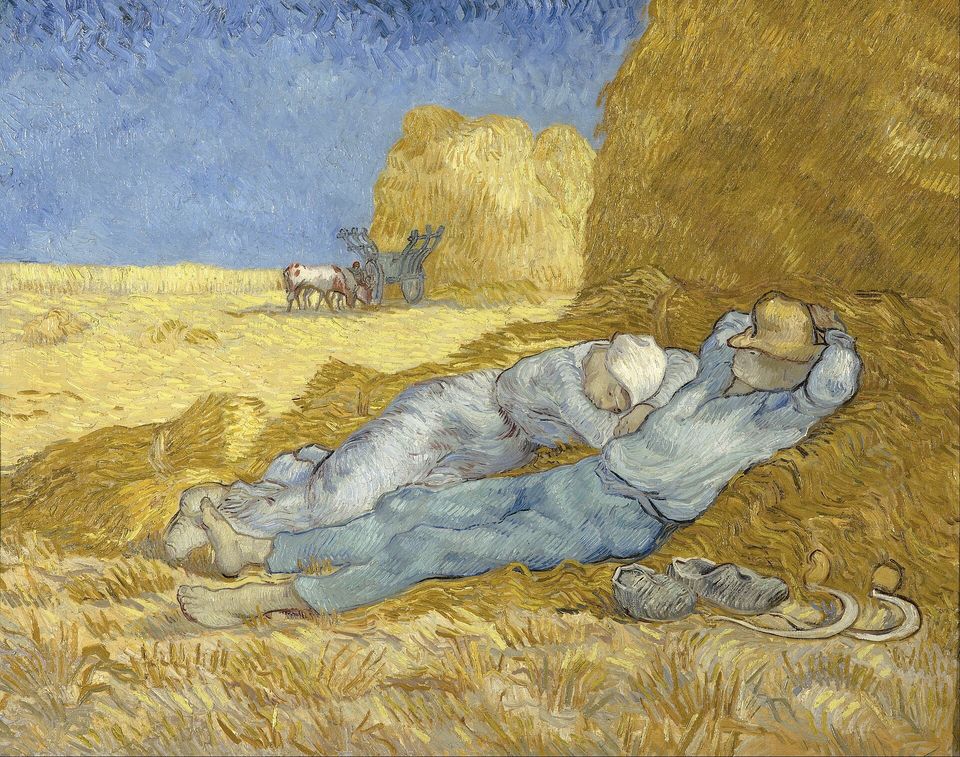
Rest was always part of the design
The Bible has a lot to say about rest. One of my favorite lines is short: “The Sabbath was made for man, not man for the Sabbath” (Mark 2:27). Rest isn’t a reward you earn after enough work. It’s a gift, built into how we were made.
And there’s a psalm that could have been written for this season: “It is in vain that you rise up early and go late to rest, eating the bread of anxious toil; for he gives to his beloved sleep” (Psalm 127:2).
Anxious toil is exactly what the treadmill produces. You work harder and faster, trying to keep up, and you never quite get there. The psalm offers another way. Trust that your life doesn’t depend on keeping pace with the machine, and go to sleep.
You don’t have to share my faith to know rest isn’t optional. A body that never rests breaks down, and a mind does too.
What to do this week
Name the two worlds. If you’re feeling the strain of learning while producing, say so to your team or your manager. You’re probably not the only one.
Decide what fills your capacity. When AI saves you time, choose on purpose what goes into that time. Don’t let the default always be “more.”
Turn the device off. Pick a time each day, maybe an evening or a meal, and turn it off. Not on silent. Off.
Take one real day of rest. Once a week, step off the treadmill completely. The work will still be there. So will you, and you’ll be better for it.
Leaders, watch the timelines. If you lead people, be careful about assuming that “AI can do it faster” means “people can do it faster.” Learning takes time too.
Enjoyed this article?