The day had started with a miracle. Jesus fed more than five thousand people with a boy’s lunch, and there were twelve baskets of leftovers.
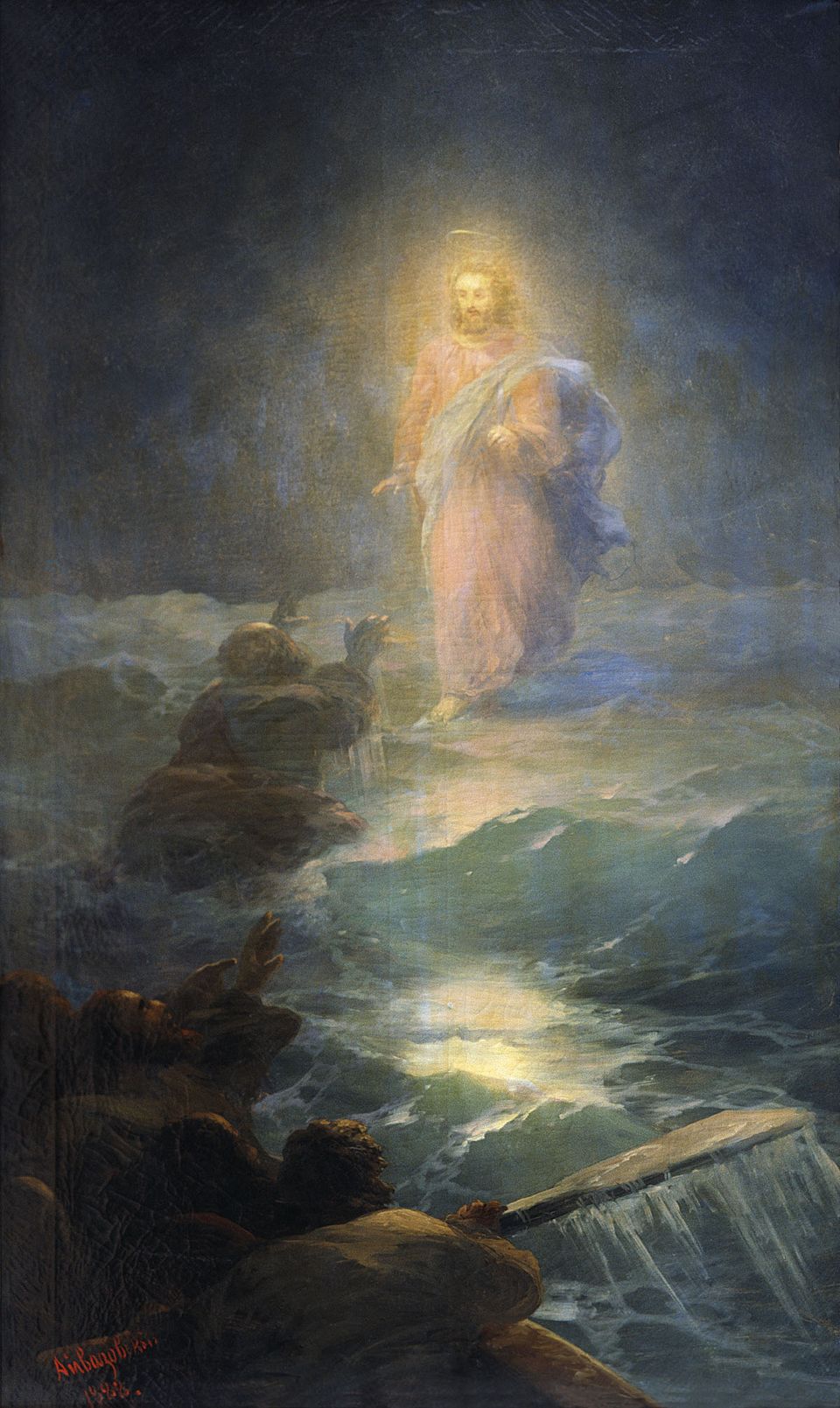
That night the disciples were out in a boat on the Sea of Galilee, rowing into the wind in the dark, and Jesus wasn’t with them. A storm came up. Then they saw Him walking toward them on the water, and they were terrified.
But he said to them, “It is I; do not be afraid.” Then they were glad to take him into the boat, and immediately the boat was at the land to which they were going. (John 6:20–21)
This is a story for disciples, people who are trying to follow Jesus. If that’s you, every word of it is yours. If it isn’t you yet, listen in anyway, because the invitation is for you too.
He’s sovereign over all of it
Look at how much Jesus is in charge of in this one chapter.
- Their provision. He fed the crowd and had food left over.
- Their itinerary. He sent them across the lake.
- Their capacity. They were rowing late at night, tired after a long day.
- Their storms. He can stop a storm. He can also send one.
- Their safety. They got to the other side.
- Their emotions. Their fear and their gladness.
- Their training. Every bit of it was teaching them something.
Of all of those, the last one matters most. Jesus is always training His people.
R.C. Sproul liked to say there is no such thing as a “maverick molecule,” not one atom in the universe running loose outside God’s control. If there were, he said, we couldn’t be sure any of God’s promises would hold. That might sound like a cold doctrine, but when you’re in the middle of the lake at night it’s the warmest thing you can know.
Jesus is always training His people.
The training
Earlier that day He’d tested Philip: “Where are we to buy bread, so that these people may eat?” (John 6:5). He already knew what He was going to do. He just wanted to see what Philip would say.
Matthew’s account of the same night adds a scene John leaves out. Peter asks Jesus to call him out onto the water. He steps out of the boat and walks toward Jesus, and then he sees the wind and gets scared and starts to sink. Jesus catches him and says, “O you of little faith, why did you doubt?” (Matthew 14:31).
I love that. Little faith. Not no faith. Peter got out of the boat, which is more than anybody else did, and when he started to sink Jesus didn’t let him drown. He grabbed him.
That’s how we learn. We don’t learn by never being afraid. We learn by being afraid and finding out Jesus is right there.
Disciples still get scared
Being a disciple doesn’t mean you never feel fear, and it doesn’t mean you never doubt. What the trained disciple learns is to take those first feelings and bounce them straight to God.
David said it simply: “When I am afraid, I put my trust in you” (Psalm 56:3). He didn’t say he was never afraid. He said when.
People who don’t follow Jesus face the same storms we do, the diagnosis and the layoff and the phone call in the night. The storms are just as big for us. What’s different is who’s in the boat.
Real change costs something
The writer James Baldwin once said that any real change means the breakup of the world as you’ve always known it, and the end of safety. He’s right about that. Following Jesus will cost you the illusion that you’re in control.
What you get in trade is the real thing. You lose the illusion, and you gain a Lord who walks on the water you’re drowning in and says, “It is I; do not be afraid.”
If you’re in the storm right now
- Tell Him you’re scared. He already knows. Say it anyway.
- Remember the baskets. Think back to the last time He came through. The disciples had seen a miracle that very same day.
- Take Him into the boat. That’s what they did. Invite Him into the specific thing you’re facing.
- Step out where He calls. Little faith that obeys is worth more than big talk that stays in the boat.
Are you ready to stop white-knuckling the oars and start living with Jesus in the boat? That starts with putting your faith in Him, and little faith is enough to start with.
Enjoyed this article?