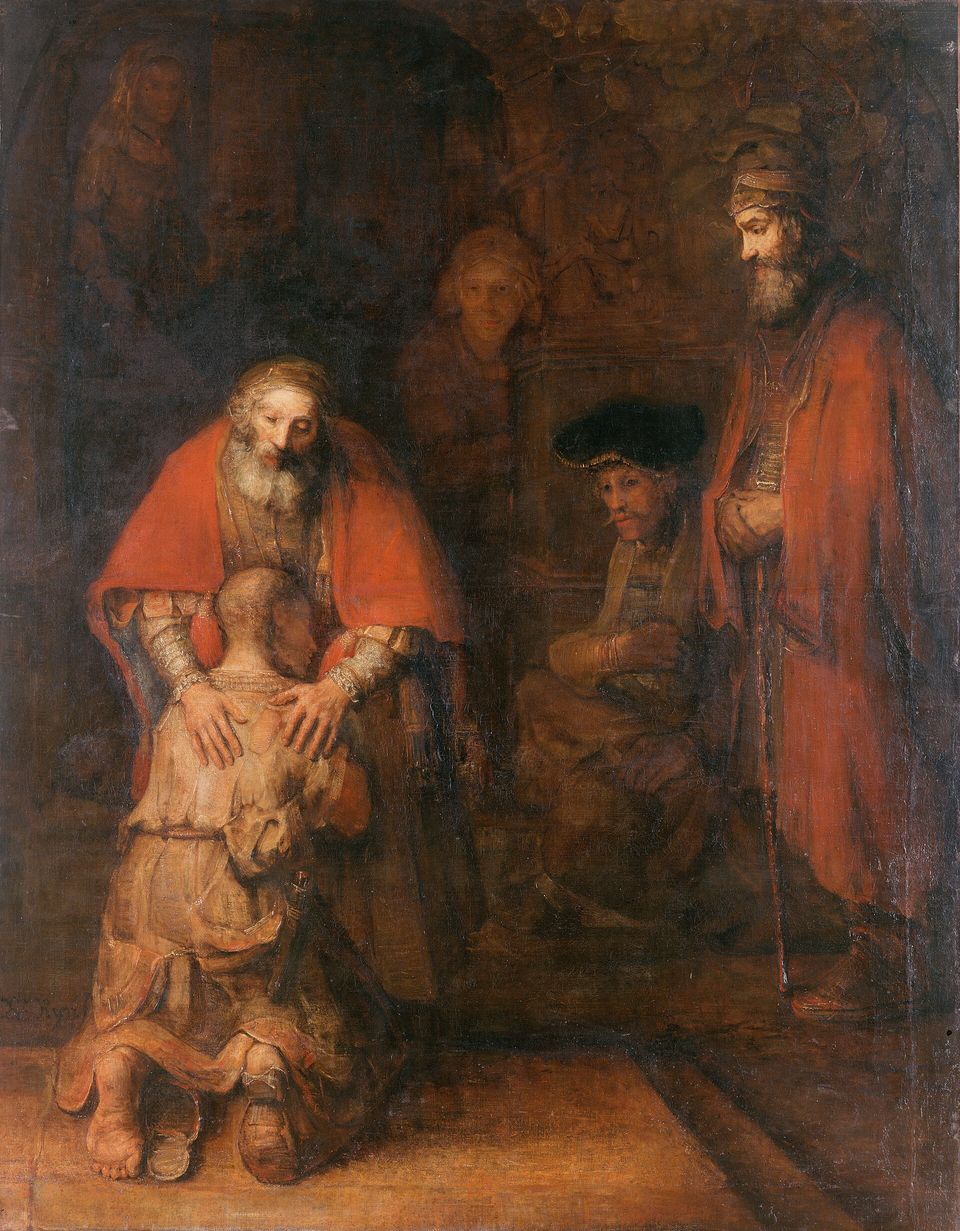
In the same chapter, Jesus tells two stories that seem to point in opposite directions.
In one, a shepherd leaves ninety-nine sheep in the open country and goes after the one that wandered off. He doesn’t wait. He searches until he finds it, then carries it home on his shoulders (Luke 15:4–6).
In the other, a father lets his younger son walk out the door with half the inheritance. He doesn’t chase him to the far country. He waits, watching the road, until the son “came to himself” and turned for home (Luke 15:17–20).
So which is it? When someone drifts, do we go after them, or do we let them go and keep the porch light on?
Over the years I’ve learned a rule of thumb: pause when I’m tempted to act, and act when I’m tempted to pause. My nature can be deceptive. The instinct that feels most urgent is often the one I most need to question.
The Bible Isn’t Contradicting Itself
Scripture often puts two wise answers side by side on purpose. The clearest case is Proverbs 26:4–5:
Answer not a fool according to his folly, lest you be like him yourself. Answer a fool according to his folly, lest he be wise in his own eyes.
The editors of Proverbs knew exactly what they were doing when they set those verses next to each other. Both are true. Neither is a rule you can apply without looking up from the page.
That’s the point. God didn’t give us a flowchart. He gave us truths that pull against each other, so we would have to ask Him which one fits this person, on this day. Wisdom isn’t knowing the right verse. It’s knowing which right verse.
When we flatten these tensions, we drift into one ditch or the other. Some of us always chase, and we end up rescuing people from consequences God meant to use. Some of us always wait, and we call our passivity patience.
Chase the Sheep, or Wait for the Son?
Look closer at the two stories and the difference starts to show.
A sheep wanders. It isn’t rebelling; it’s just lost, nibbling its way out of sight. It can’t find its way home and doesn’t know it needs to. If no one goes, it dies out there.
The son decides. He asks for his share, packs his bags, and leaves with his eyes open. Chasing him down the road would only have given him someone to argue with. What he needed was the far country: the empty wallet, the pig trough, the moment he came to himself.
So one question sorts a lot of cases: Is this person lost, or leaving? The confused, the wounded, the new believer who slipped away without noticing: go after them. The one who has counted the cost and chosen the far country: let him go, pray hard, and stay ready to run when he turns.
But be careful. You can’t always tell from the outside. I once went hard after a friend I had decided was in rebellion. I was aggressive about it, and I chased them right out of my life. Only a bit later did I realize they weren’t rebelling at all. They were running from hurt.
Had I been a little more patient before acting, I probably would have discerned that pain. Most times when I’ve chased someone without stopping to consider, I’ve ended up chasing them away. Don’t assume you know someone’s motives. Slow down long enough to find out.
The opposite mistake is just as real, and it’s one of my regrets in ministry. In the parable of the sower, some seed springs up among thorns, only to be choked by the cares of the world (Matthew 13:7, 22). I’ve watched that happen to people new to the faith because I didn’t seek them out as I should have. Young faith needs tending. The newly planted are sheep, not prodigals. When they go quiet, go find them.
Notice the father isn’t passive. He’s watching. He sees his son “while he was still a long way off” and runs (Luke 15:20). Waiting well is active. It just doesn’t take the wheel.
And notice the third story. The older brother never left the farm, yet he was lost too. The father went out to him (Luke 15:28). Sometimes the one who needs chasing is the one who never walked away.
Step Out, or Sit Down and Count?
Peter steps out of the boat onto the water with nothing but a word from Jesus: “Come” (Matthew 14:29). Abraham leaves home “not knowing where he was going” (Hebrews 11:8). Neither one ran the numbers.
Yet Jesus also says no one builds a tower without first sitting down to count the cost, and no king goes to war without asking whether ten thousand can meet twenty thousand (Luke 14:28–32).
Here the difference is often about who gave the call. Peter didn’t decide to walk on water. He asked, and Jesus said come. Abraham didn’t pick Canaan off a map. God called him. Faith steps out when God has spoken, even when the math doesn’t work.
The tower is different. It’s my project, my plan, my ambition. When the idea starts with me, I owe it a long, honest look at what it will take. “Stepping out in faith” on something God never asked for isn’t faith. It’s presumption with a Bible verse attached.
And the cost Jesus has in view in Luke 14 isn’t really bricks. It’s discipleship: “any one of you who does not renounce all that he has cannot be my disciple” (v. 33). Counting the cost doesn’t mean deciding whether following Jesus is worth it on paper. It means going in with your eyes open, so you don’t quit halfway up the wall.
The two belong together. You count the cost once, at the front door of discipleship. Then, when He says “Come,” you step out of the boat.
More Pairs Like These
Once you start looking, they’re everywhere:
| Do this | And also this |
|---|---|
| Bear one another’s burdens (Gal 6:2) | Each will have to bear his own load (Gal 6:5) |
| Let your light shine before others (Matt 5:16) | Don’t practice your righteousness to be seen (Matt 6:1) |
| Do not judge (Matt 7:1) | Judge with right judgment (John 7:24) |
| Be still, and know that I am God (Ps 46:10) | Go therefore and make disciples (Matt 28:19) |
| Be angry and do not sin (Eph 4:26) | Put away all bitterness and wrath (Eph 4:31) |
| Turn the other cheek (Matt 5:39) | Rebuke your brother when he sins (Luke 17:3) |
Questions That Help You Discern
There’s no formula, but there are good questions. Here are a few I come back to:
- Lost or leaving? Is this person confused and drifting, or choosing with open eyes? Don’t assume their motives; find out.
- Whose idea is it? Did God call this, or did I? A clear word invites a step; my own plan demands a count.
- Which way do I lean? Pause when you’re tempted to act; act when you’re tempted to pause. If I always chase, I may need to learn to wait. If I always wait, I may be hiding. Our default is usually the ditch we’re closest to.
- What does love need here? Sometimes love runs after. Sometimes love steps back so consequences can teach. Ask what would actually do this person good, not what would make me feel useful.
- What do wise people around me see? Proverbs says there’s safety in many counselors (11:14). Discernment isn’t a solo sport.
- Have I prayed, or just reasoned? Both truths come from the same Shepherd. Ask Him which one He’s speaking today.
Wisdom Is a Person
If the Bible gave us one rule for every case, we wouldn’t need to stay close to God. We’d just need the rulebook.
Instead, He gave us the shepherd and the father, the boat and the tower, and then He gave us Himself. Christ “became to us wisdom from God” (1 Corinthians 1:30). The answer to “chase or wait?” is usually found the same way: by walking closely enough with Jesus to hear which word He’s speaking right now.
There’s freedom in that, too. When I’m not the one helping someone, I can trust that God is still at work. He may be bringing other people into that person’s life. He may be letting them feel the weight of their choices so they learn what they need to learn. Either way, the One who keeps His people “will neither slumber nor sleep” (Psalm 121:4). He is watching over every stray, even when I’m not. It’s a relief to know I don’t have to be ruler of the universe.
He is the one who left the ninety-nine to come find us. He is also the one who waited, arms open, for us to come home. He knows when to do which. Stay near Him, and you’ll learn too.