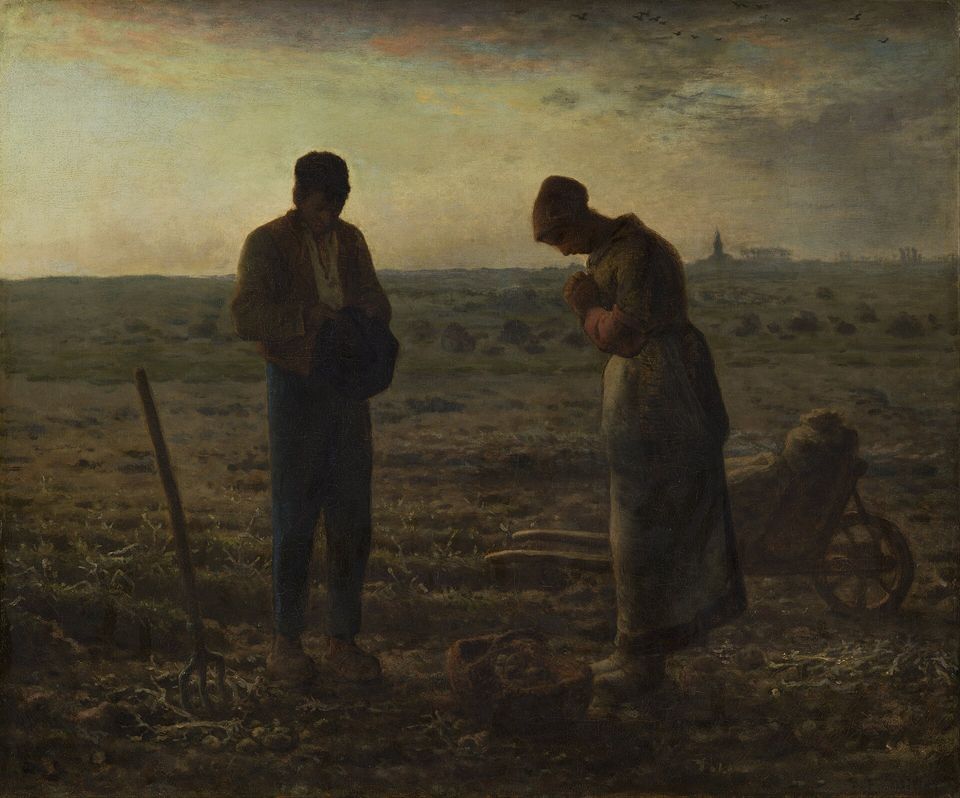
It’s Thanksgiving, and I want to give thanks for something I don’t name very often. God speaks softly, and he has been patient with a man who is slow to hear.
The low whisper
When Elijah ran to Mount Horeb, worn out and ready to quit, God passed by. There was a wind strong enough to break rocks, and then an earthquake, and then a fire. “But the LORD was not in the fire. And after the fire the sound of a low whisper” (1 Kings 19:12).
God can move in the earthquake. Most days, though, he speaks in nuance. A verse catches on something in you. You get a nudge to call a friend, or a burden won’t leave you alone for a week. A prayer you stopped praying gets answered, and you never notice.
God isn’t silent. I forget.
Israel had the same problem, which is why David preached to his own soul: “Bless the LORD, O my soul, and forget not all his benefits” (Psalm 103:2). It’s why Samuel set up a stone and called it Ebenezer, “for he said, ‘Till now the LORD has helped us’” (1 Samuel 7:12). God’s people have always needed help remembering.
So when I built the Agōn app, I wanted it to help me remember. Two features in it stir up more gratitude in me than I expected.
Gratitude: replaying answered prayer
In the prayer tool, when God answers a request, you mark it answered. Without some help, that’s usually the end of it. The request drops off the list, and a week later you’ve forgotten you ever asked.
Remember the ten lepers? All ten were healed, but only one, “when he saw that he was healed, turned back, praising God with a loud voice” (Luke 17:15). I don’t think the other nine were wicked. They were busy. They got what they asked for and went on with their day. Most of us are one of the nine more often than we’d like to admit.
The Gratitude feature is a way of turning back. It replays prayers God has answered, so you see what you asked, when you asked it, and how he answered.
When I scroll back through mine, I see someone healed. I see anxieties that came and then passed. A bill got paid. There’s a clear no in there, and a clear no is as good as a clear yes. And I see an increase in self-control that I’d been asking God for.
We tend to remember our worries in detail and God’s faithfulness in summary. Seeing the request you made while you were anxious, right next to God’s answer, turns that around. It’s hard to pretend he didn’t come through.
Through line: the deep movements
The second feature works in the journal.
I journal most mornings, often by voice. Over months that adds up to a lot of words, and most of them are ordinary: what’s on the calendar, what’s bothering me, what I read that morning. Day to day, it can feel like nothing much is happening.
Through line looks across your entries and names the deeper movements running underneath them. It points to the threads more than the events, like a theme that keeps coming up for months, or a fear that has been losing its grip, or a desire you kept circling before you were willing to say it out loud. Laid end to end, those entries can show how God has been at work the whole time, one small nudge at a time.
I want to be careful here. The app doesn’t hear God, and it can’t. It only notices patterns in what you already wrote down. But that’s the point. The whisper was there all along, scattered across a dozen half-finished thoughts, and you just needed help seeing the line that ran through them. Mary “treasured up all these things, pondering them in her heart” (Luke 2:19), and I’m grateful for anything that helps me ponder.
Thank you for the nuances
So here is my thanks this year.
Thank you, Lord, that you didn’t wait for me to get louder or smarter before you spoke. Thank you for the low whisper, and for answers I almost missed, and for slow work in me that I couldn’t see while I was living it. Thank you for being patient while I learn to listen. And thank you for the small helps along the way, a stone in the ground or a song or a journal, even a feature in an app, that turn me back around to say thank you.
You don’t need an app to do this. Take ten minutes today and look back over the last year. Write down every prayer you can remember God answering, then read the list out loud at the table before you eat.
If you’d like some help with it, the Agōn app is free, and the prayer and journal tools are both in it.
Happy Thanksgiving.
Enjoyed this article?
Don't just read about it
The Agōn app · Free to use
A free app for the disciplines you've already decided to keep. It has routines you can time, a journal, and a prayer list. When God answers a prayer, the app holds onto it so you can look back and thank Him.
Get the free app at agon1230app.com