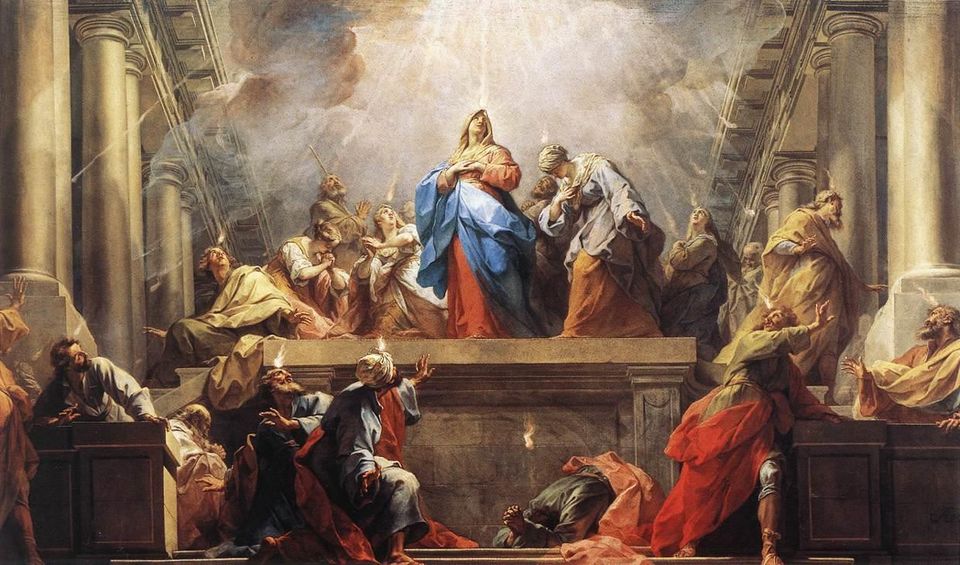
Few gifts of the Spirit stir up more heat than speaking in tongues. Some churches treat it as the badge of a real Christian. Others treat it as an embarrassment to be quietly avoided. Paul refuses both. He asks, “Do all speak with tongues?” and expects the answer no (1 Corinthians 12:30). Then, two chapters later, he says, “Do not forbid speaking in tongues” (1 Corinthians 14:39).
If we want to understand this gift, we need to hold both of those sentences at once.
Why the Pentecostal movement got something right
Pentecostal churches don’t all agree on what baptism in the Spirit is. What they share is a conviction that the Spirit is experienced. He is not only a doctrine to affirm but a presence to know.
That conviction is a big part of why the movement has spread across the world. People everywhere are hungry for something real. Much of Western Christianity has drifted into a kind of checklist faith: believe the right doctrines, do the right behaviors, and assume that something supernatural is happening even though nobody feels anything. Pentecostals push back on that, and they are right to. To have the Holy Spirit is to have a reality you experience.
Where the conversation goes wrong is when one particular experience, speaking in tongues, becomes the required proof that the Spirit has come.
Two meanings of “baptized in the Spirit”
Much of the confusion clears up when we notice that the New Testament uses the phrase “baptized in (or with) the Holy Spirit” in two different ways. They don’t contradict each other. They are simply different uses of the same words.
Paul uses it for conversion. “For in one Spirit we were all baptized into one body—Jews or Greeks, slaves or free—and all were made to drink of one Spirit” (1 Corinthians 12:13). Nearly everyone agrees this is what happens when someone becomes a Christian: the Spirit unites them to Christ and to his body, the church. Every believer has received this.
Luke uses it for empowerment. Jesus told his disciples, “John baptized with water, but you will be baptized with the Holy Spirit not many days from now” (Acts 1:5). These men were already believers. Luke’s Gospel ends with them worshiping Jesus, returning to Jerusalem “with great joy,” and “continually in the temple blessing God” (Luke 24:52–53). They weren’t waiting to be born again. They were waiting for power.
Luke gives at least four clues that this is what he means:
- He calls it filling. Jesus says to wait for the baptism (Acts 1:5), and when it comes Luke says, “they were all filled with the Holy Spirit” (Acts 2:4). Throughout Acts, being filled happens again and again to the same people.
- He ties it to Joel’s promise. Peter explains Pentecost with Joel 2: sons and daughters will prophesy (Acts 2:16–18). That is a promise of Spirit-empowered speech, not a description of new birth.
- He calls it power for witness. “You will receive power when the Holy Spirit has come upon you, and you will be my witnesses … to the end of the earth” (Acts 1:8).
- He calls it being clothed. “Stay in the city until you are clothed with power from on high” (Luke 24:49).
This empowering might come in one decisive moment after conversion, or at the moment of conversion. Either way, it is not a one-time box to check. We need fresh fillings again and again, and they look different in different seasons. Preachers and Puritans have long prayed for “a fresh baptism” or “a fresh anointing” before they stand up to speak. That is a good prayer for every believer heading into ministry. (I wrote more about this in Filled with the Spirit.)
So where do tongues fit? Spirit empowerment may come with tongues or other unusual signs. It may not. Scripture doesn’t make any one sign the required evidence.
What tongues are in Scripture
The gift shows up in two places in the New Testament: the book of Acts and Paul’s letter to the Corinthians.
In Acts, tongues accompany the Spirit’s arrival at key moments as the gospel crosses new boundaries. At Pentecost, the crowd from every nation was amazed “because each one was hearing them speak in his own language” (Acts 2:6). At Cornelius’s house, the first Gentile converts were heard “speaking in tongues and extolling God” (Acts 10:46). In Ephesus, “the Holy Spirit came on them, and they began speaking in tongues and prophesying” (Acts 19:6).
But Acts also records fillings with no tongues at all. When the church prayed after Peter and John were threatened, “they were all filled with the Holy Spirit and continued to speak the word of God with boldness” (Acts 4:31). The sign was boldness, not tongues.
In 1 Corinthians 12–14, tongues are one gift among many, given by the Spirit “to each one individually as he wills” (1 Corinthians 12:11). Paul lists “various kinds of tongues” and “the interpretation of tongues” next to wisdom, faith, healing, and prophecy (1 Corinthians 12:8–10).
Three ways the gift shows up
Paying attention to how tongues work in each passage, many teachers describe three distinct uses of the same gift:
| Use | What it is | Who it serves | Key texts |
|---|---|---|---|
| Personal prayer | A language of prayer between the believer and God, not understood by others | The one praying, who is built up | 1 Corinthians 14:2, 4, 14–15 |
| Sign to outsiders | A real human language the speaker never learned, understood by hearers without an interpreter | Unbelievers who hear the gospel in their own language | Acts 2:4–11; 1 Corinthians 14:22 |
| Message to the church | A word spoken in a tongue during worship, then interpreted | The whole congregation | 1 Corinthians 14:5, 13, 27–28 |
Personal prayer. “One who speaks in a tongue speaks not to men but to God; for no one understands him, but he utters mysteries in the Spirit” (1 Corinthians 14:2). It “builds up himself” (14:4). Paul valued this: “I will pray with my spirit, but I will pray with my mind also” (14:15).
A sign to outsiders. At Pentecost, the disciples didn’t babble. Visitors said, “We hear them telling in our own tongues the mighty works of God” (Acts 2:11). Paul says “tongues are a sign not for believers but for unbelievers” (1 Corinthians 14:22).
A message to the church. When a tongue is spoken in the gathering, it must be interpreted so everyone can understand and be built up. “One who speaks in a tongue should pray that he may interpret” (1 Corinthians 14:13).
Do I have to speak in tongues?
People ask me this often, usually with some anxiety. The short answer is no.
Not to be saved. Salvation is by grace through faith in Christ. Every believer has the Spirit (Romans 8:9), and Paul says plainly that not everyone speaks in tongues (1 Corinthians 12:30). If tongues were required for salvation, Paul’s question would make no sense.
Not to prove you’ve been filled. Acts shows Spirit-filled believers who spoke in tongues and Spirit-filled believers who simply spoke with boldness. The surest evidence of the Spirit is the fruit he grows: love, joy, peace, patience, kindness, goodness, faithfulness, gentleness, and self-control (Galatians 5:22–23).
If you have never spoken in tongues, you are not a second-class Christian. If you have, you are not a first-class one.
Paul’s guardrails for public worship
The Corinthian church had a problem, and it wasn’t too little tongues. It was too much tongues without love or order. Their worship had become loud, confusing, and self-focused. So Paul gave them guardrails.
Understanding matters more in the gathering. “In church I would rather speak five words with my mind in order to instruct others, than ten thousand words in a tongue” (1 Corinthians 14:19). Paul was not against the gift. He spoke in tongues “more than all of you” (14:18). He was against using it where it builds no one up.
Interpretation is required. “If any speak in a tongue, let there be only two or at most three, and each in turn, and let someone interpret. But if there is no one to interpret, let each of them keep silent in church and speak to himself and to God” (1 Corinthians 14:27–28). Without an interpreter, the tongue belongs in private prayer, not the public service.
Order reflects God’s character. “For God is not a God of confusion but of peace” (14:33). “All things should be done decently and in order” (14:40).
Self-control is a gift too
Some people believe that when the Spirit moves, they can’t help what they do. Paul says otherwise: “the spirits of prophets are subject to prophets” (1 Corinthians 14:32). The Spirit does not overpower a person. He works with them. Someone with the gift of tongues can choose to stay silent when there is no interpreter, and Paul expects them to.
That fits the rest of Scripture. Self-control is listed as fruit of the Spirit (Galatians 5:23). A person who can’t stop speaking in tongues at the wrong time isn’t showing more of the Spirit. They are showing less of his fruit.
Do not forbid it
Guardrails are not a wall. Paul’s correction never turns into a ban. “Now I want you all to speak in tongues, but even more to prophesy” (1 Corinthians 14:5). “So, my brothers, earnestly desire to prophesy, and do not forbid speaking in tongues” (14:39).
A church that cares about Scripture can’t simply shut this gift down because it has seen it misused. The answer to misuse is right use, not no use.
Love is the point
Paul put his great chapter on love right in the middle of his teaching on spiritual gifts. “If I speak in the tongues of men and of angels, but have not love, I am a noisy gong or a clanging cymbal” (1 Corinthians 13:1). Tongues will cease one day (13:8). Love never ends.
So here is where I land:
- If you speak in tongues, thank God for it and use it gladly in private prayer. In public, speak only when there will be an interpretation. Never treat the gift as a measure of anyone else’s faith.
- If you don’t, don’t be anxious and don’t fake it. Ask the Father for fresh filling for whatever ministry he has given you, and trust him to give what he wills. “Pursue love, and earnestly desire the spiritual gifts” (1 Corinthians 14:1).
- If you lead a church, don’t require tongues and don’t forbid them. Teach what Scripture says, keep worship orderly, and keep pointing everyone to Christ.
The Spirit didn’t come to give us a badge. He came to make us witnesses, clothe us with power, and grow the life of Jesus in us. Every gift he gives, tongues included, serves that end.
See also
- What Is the Baptism of the Holy Spirit? by John Piper, Ask Pastor John, Desiring God, June 21, 2019The section on Paul's and Luke's two uses of "baptized in the Spirit" draws heavily on this answer.